
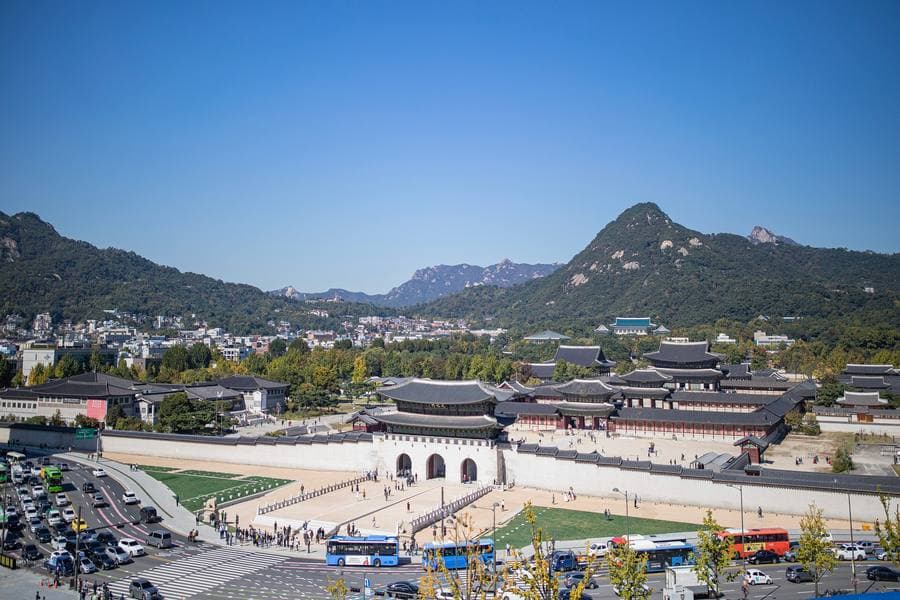
The won just hit a 17-year low — what that actually saves you in Seoul
July 22, 2026
The Korean won broke past 1,550 to the US dollar in early July, its weakest level in roughly 17 years — a line last crossed during the 2008–09 financial crisis. Because the Hong Kong dollar is pegged to the greenback, that slide translates directly for anyone booking Seoul or Busan: your HK$ now buys noticeably more won than it did even a year ago. Add expanded low-cost capacity on the Hong Kong–Korea routes and a genuine question follows — is this the best value window on Korea in over a decade, or just a currency headline that doesn't survive contact with actual prices on the ground?
How weak is weak
The won's slide has been building since the political shock of late 2024, but 2026 pushed it into territory not seen in a generation: it broke below 1,500 to the dollar for the first time since the global financial crisis back in March, then breached 1,550 in early June and again in July as a stronger dollar and continued foreign selling of Korean equities kept the pressure on. At today's roughly 189 won per Hong Kong dollar, you're getting about 25% more won for the same HK$100 than you would have in 2019, and meaningfully more than a year ago, when the rate sat closer to 182.
What that buys you
Run the numbers on an actual trip. A solid mid-range Seoul hotel room — the ₩120,000-a-night kind with a private bathroom in Myeongdong or Hongdae — would have cost you around HK$794 a night at 2019 rates. At today's rate, it's closer to HK$635: over a five-night stay, that's roughly HK$795 back in your pocket before you've changed your itinerary at all. A KTX economy seat from Seoul to Busan, around ₩66,000, has gone from about HK$437 to HK$349. Department stores are reporting record foreign spending as the weak won pulls in shoppers chasing K-beauty and luxury goods at a discount duty-free counters can't match.
Why this isn't Japan's story in reverse
Japan got more expensive this year through policy — a tripled departure tax, a fivefold visa fee hike. Korea is getting cheaper through currency, which is a different kind of window: it can close as fast as it opened if the US Federal Reserve cuts rates or the Bank of Korea intervenes, but nothing about the underlying infrastructure or service quality has degraded to produce the discount. Roughly 60,000 Hong Kong travellers visited Korea in May alone, and T'way Air's Hong Kong–Seoul and Hong Kong–Busan fare promotions are running through October, adding capacity right as demand is picking up.
The catch
The discount is real, but so is Seoul's own tourism boom — hotel average daily rates in the Seoul–Incheon corridor have been climbing toward record highs as arrivals surge, meaning the sticker price you're discounting is rising under you. Mid-range rooms in Myeongdong and Hongdae are filling first. If the won's weakness is what finally gets you to book Korea, book the room now rather than waiting for an even better exchange rate — the currency window and the room-availability window are moving in opposite directions.
See how South Korea compares to its own decade of pricing history on our destination page, or drill into Seoul specifically.