
Lisbon is having a moment — go before the prices catch up
June 17, 2026
Lisbon has spent a decade as Western Europe's value darling: Atlantic light bouncing off tiled façades, yellow trams grinding up impossible hills, and a food-and-wine scene that punches far above its price. That reputation is now firmly out — the city tops "where to go next" lists every year — and prices are slowly climbing to meet the hype. "Slowly" is the operative word: on TripDip's real-feel index Lisbon still reads well against its own history. But the clear-value years are the ones before a place fully arrives, and this is one of them. Here's how to spend them well.
Old Lisbon: Alfama and Tram 28
Start in the Alfama, the tangle of medieval lanes that survived the 1755 earthquake — washing lines, fado drifting from doorways, and staircases that go nowhere in particular. The classic move is to ride the storied Tram 28, the vintage yellow streetcar that rattles past the cathedral, the castle and the best of the old town. Ride it early or late to dodge the crush (a single fare is roughly HK$30, or use a rechargeable transit card). Climb up to São Jorge Castle for the view, but honestly, the miradouros below do the job for free.
The viewpoints and the riverside
Lisbon is a city of hills, which means it's a city of miradouros — terraced viewpoints, often with a kiosk café, where locals nurse a beer at golden hour. Miradouro de Santa Luzia and Senhora do Monte are among the best, and they cost nothing. Down at river level, two food-and-culture anchors:
- Time Out Market — a converted market hall where a curated line-up of the city's kitchens serve small plates under one roof. Great for a group that can't agree; expect roughly HK$60–120 a dish.
- LX Factory — a former industrial complex under the 25 de Abril bridge, now full of independent shops, street art, restaurants and one gloriously chaotic bookshop. Ideal for a long lazy afternoon.
Belém: custard tarts and monuments
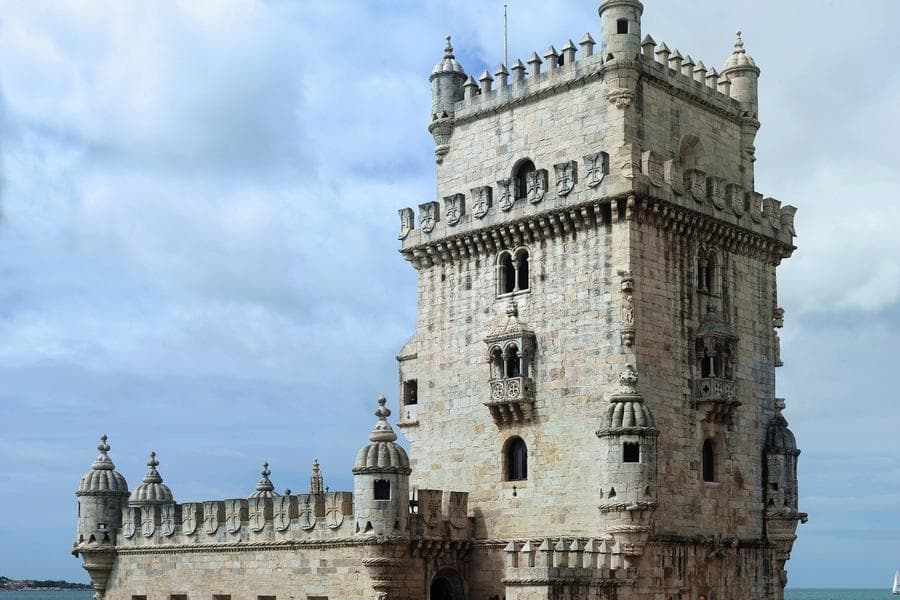
Take the tram or train west to Belém, where Portugal's Age of Discovery is carved into stone. The Jerónimos Monastery and the riverside Belém Tower are the twin UNESCO showpieces (entry to each is roughly HK$80–100; the monastery cloister is the highlight). But the real pilgrimage is to the original pastéis de nata bakery, where the custard tarts come warm with a dusting of cinnamon — a couple of euro each and worth every cent. Buy more than you think you need.
The Sintra day trip
Half an hour by train sits Sintra, a fairytale hill town of palaces wrapped in misty forest. The candy-coloured Pena Palace is the icon; the crumbling, romantic Quinta da Regaleira, with its initiation well spiralling into the earth, is arguably more fun. Go early — Sintra gets swamped by midday — and book palace tickets ahead in summer. A full day trip, tickets and train included, runs roughly HK$300–450 per person.
Go before it fully arrives
Here's the value logic. Lisbon isn't cheap because it's undiscovered — it's plainly discovered. It's cheap because prices haven't yet caught up to the demand, and that gap is the window. Every year the trams get a little more crowded, the summer rates tick a little higher, and the discount narrows. The traveller who goes in a value year gets the same light, the same tarts, the same tram — for less than the one who waits.
For HKD travellers weighing a Western-European summer, that makes Lisbon the rare capital that's both bucket-list and still-affordable — a combination that doesn't last. See Portugal's current read against its own history on its destination page, and compare it to the rest of the continent on the Europe hub. The moment to go is while the discount's still on the table.