
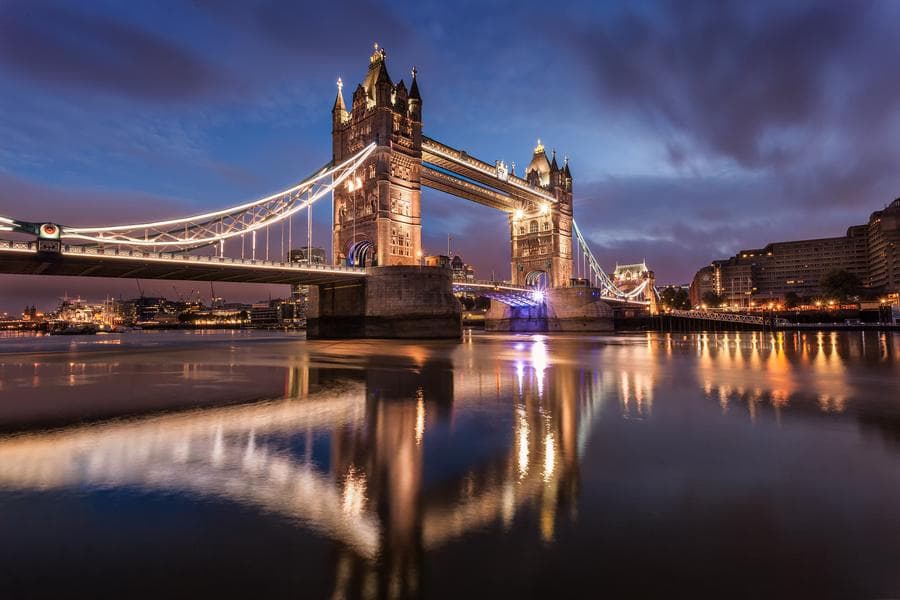
Sterling slips: is now finally the time to do London?
June 8, 2026
London will never top a cheap-destinations list — but that's the wrong list to read. The right question is whether London is cheap for London, and with a softer pound the answer has swung more in your favour than it has for years. The fixed costs still bite: flights from Hong Kong and a decent central hotel are the same eye-watering line items they always were, and no currency move rescues them entirely. But once you've paid to be there, a weaker sterling quietly discounts almost everything you actually do — and London happens to be a city where a huge amount of the best stuff is free or close to it.
That's the trick to reading London on a value index. Its ceiling is high, but its floor is astonishingly low, and a soft pound lowers the floor further.
The free stuff is the good stuff
London's headline attraction is that its greatest museums cost nothing to enter — not a stripped-back "free day," but permanent free admission to world-class collections. The British Museum, the National Gallery, Tate Modern, the Victoria & Albert, the Natural History Museum and Tate Britain are all free to walk into. You could fill four days without paying an entry fee, and these aren't consolation prizes — they're among the finest museums on earth.
Layer the parks and markets on top and the free city gets richer still:
- Borough Market for a graze-your-way-through lunch near London Bridge — you pay for what you eat, not to be there.
- Broadway Market (Saturdays, Hackney) and the flower riot of Columbia Road (Sundays) for the East London weekend rhythm.
- Hyde Park, Regent's Park, Hampstead Heath and Greenwich for the walking-city version of London that costs nothing but shoe leather.
A day built around a free museum, a market lunch and a long park walk is a genuinely great London day — and a rounding error on your budget.
Where a weak pound actually shows up
Sterling's slide lands hardest on discretionary, in-country spending — the pub round, the restaurant bill, the theatre ticket. A few moves stretch it further:
- Theatre on the day. The West End runs day seats and rush tickets at a fraction of full price if you queue or use the official lotteries, plus the discount booth in Leicester Square for same-day seats. World-class theatre for roughly the price of a cinema-plus is one of London's real bargains.
- Eat where Londoners eat. Skip the tourist-strip mark-ups and you'll do very well on a pub roast or a curry-house dinner — a proper meal out for roughly £15–25 a head rather than double that in Covent Garden.
- Cap your transport. Just tap in with contactless or an Oyster card everywhere. Fares are automatically capped daily and weekly, so you're never charged more than a travelcard would have cost — no maths, no over-paying, no queuing for tickets.
The honest caveat — and the play
None of this makes London cheap in absolute terms. The fixed costs — flights, hotels — are where the trip's price really lives, and they don't move much on a currency swing. So the value play is specific: get those anchors down (shoulder-season dates, a hotel a zone or two out on a capped transit line), then let the weak pound and the free-museum city do the rest. A trip where the expensive part is fixed and the daily part is discounted is exactly the shape that rewards a soft-sterling moment.
See how the UK reads against its own history on its destination page, and for the reasoning behind that read, our methodology explains how the real-feel number works. London isn't on sale — but for London, this is as friendly as the maths has looked in a while, and that's the version of "cheap" worth acting on.