
Lost something on a Japan train? Check before making a detour
November 17, 2026 · TripDipUpdated: November 17, 2026
Prepare a useful inquiry, understand registration delays and confirm the collection point before spending money on a detour.
Estimate your trip budget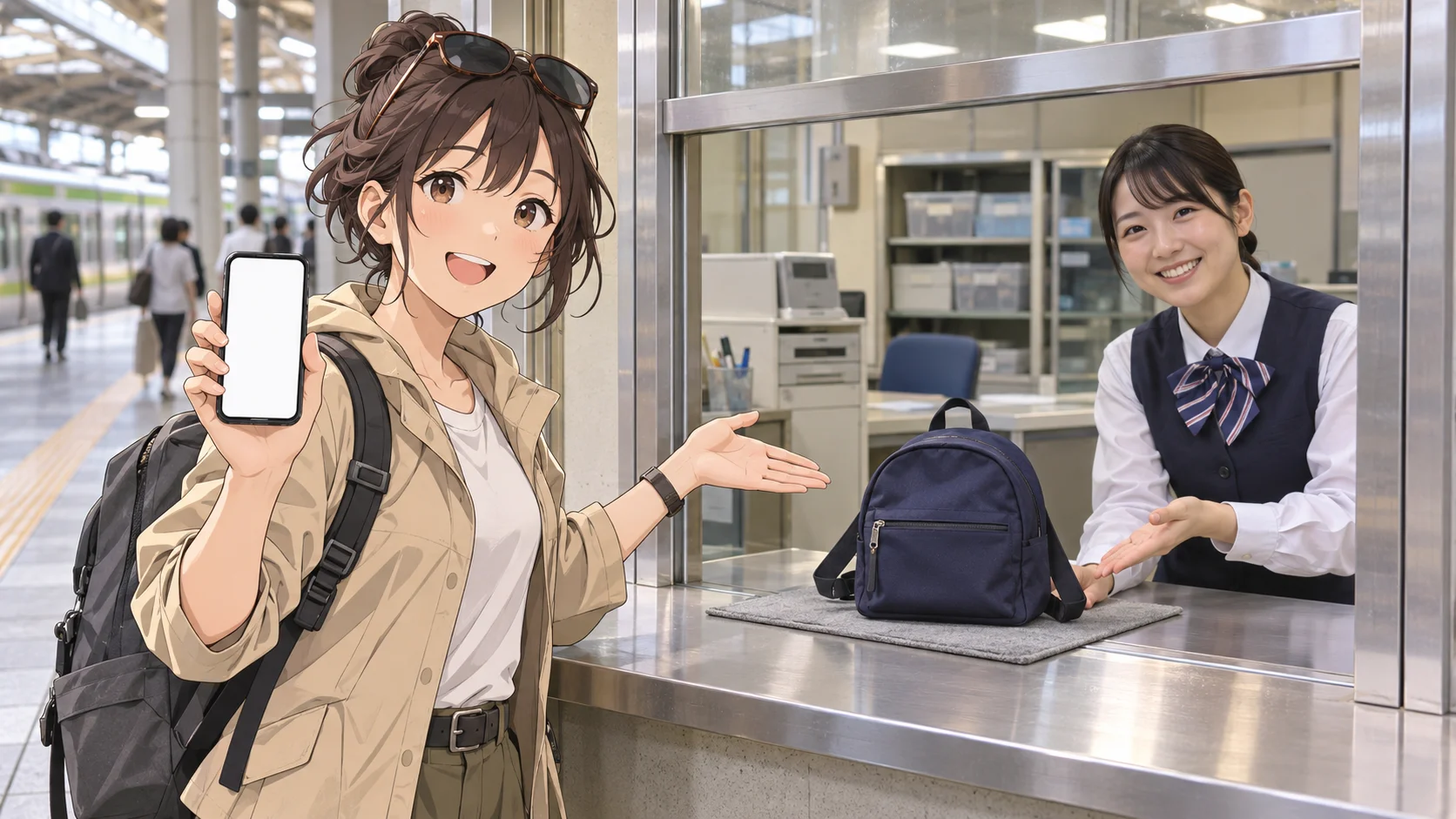
If you leave something on a train in Japan, first identify the railway company and prepare a precise description. Do not buy a return ticket to the departure station until you know where the item is being held and how collection works. JR East and JR Central publish separate lost-property procedures; this guide compares their inquiry steps, not every railway in Japan.
Build a useful inquiry
JR Central asks for the travel date, approximate boarding and alighting times, route, train and car details, seat number and where the item was left. JR East likewise asks for the date, station or line, likely location and distinguishing features; a matching photo can help. JR Central guidance; JR East guidance.
Use the following worksheet before contacting staff. It separates observations from guesses, so a search does not depend on an uncertain memory being treated as fact.
| Record | Example of useful detail | Mark uncertainty explicitly |
|---|---|---|
| Journey | Ticket record, train number, boarding and alighting stations | Which service you think it was |
| Location | Overhead rack, seat area or station facility | Last place you definitely saw the item |
| Item | Colour, material, brand and distinctive contents | Similar-looking items are not proof of ownership |
The examples are prompts, not claims that a particular item has been found. Keep identifying details for the official inquiry rather than posting sensitive contents publicly. A photo taken before travel is useful evidence to retain alongside your ticket record.
A first negative search is not the final answer
Both operators explain that registration takes time. JR East advises trying again after an interval if the item is not yet in its system. Its guidance also says that GPS information does not allow an individual search of a train during passenger service. JR Central warns that an immediate response may not be possible even when a phone can be located by GPS. JR East; JR Central.
A practical distinction follows: “not registered yet” and “not recoverable” are different conclusions. Save the inquiry reference and the time of the reply. If you follow up, add genuinely new details instead of changing uncertain details into confident claims. No recovery probability or response deadline is assumed here.
Confirm the collection point before travelling
JR Central says items may be kept at the station where handed in or another designated location, with later transfers to its Lost & Found Center in Aichi Prefecture as a general rule. It also notes that through-running trains can involve other railway companies. JR East describes transfers to designated police stations after station-specific storage periods. JR Central; JR East.
Ask four questions before spending money on a detour: has the item been identified, where is it now, what is required to collect it, and will it still be there when you arrive? Do not assume the station where you got off is the collection point. This article does not establish a universal storage period, shipping service or overseas-delivery entitlement.
Compare the detour with your remaining itinerary
Write down the extra train fare, local transfers and time away from the planned trip. Obtain the actual route quote after the collection location is confirmed. If collection would threaten an onward flight or a fixed reservation, ask the holder about available arrangements before changing either booking. The comparison is a planning method, not a price estimate or a promise that an alternative arrangement is available.
For prevention and the rest of the trip, see the Shinkansen luggage-reservation guide, Tokyo Subway Ticket comparison and Japan destination overview.
Sources and checked date
Checked 17 November 2026 against JR East's lost-property guidance and JR Central's lost-and-found page. These are two operators describing their own procedures, not interchangeable nationwide rules. This is an evergreen checklist, not a newly announced service. Collection arrangements must be confirmed for the actual item.
Cover: AI illustration of a generic Japanese railway lost-property counter, not a photograph of a specific station.